 By Ayse Ayhan
Why NK Cells Fail in Endometriosis?
 By Ayse Ayhan
Endometriosis persists in the body despite the presence of immune cells that are normally responsible for eliminating abnormal tissue. One such immune cell type is the natural killer (NK) cell, which plays a key role in identifying and destroying cells…
Key Points Lay Summary
Endometriosis Immunopathology: The Macrophage Connection
By Ayse Ayhan
Macrophages and tiny signaling particles called extracellular vesicles (EVs) are emerging as central immune players in how endometriosis develops and persists. Together, they shape the immune environment around endometriotic lesions, helping them survive, spread, and resist the body’s defenses. In…
Key Points Lay Summary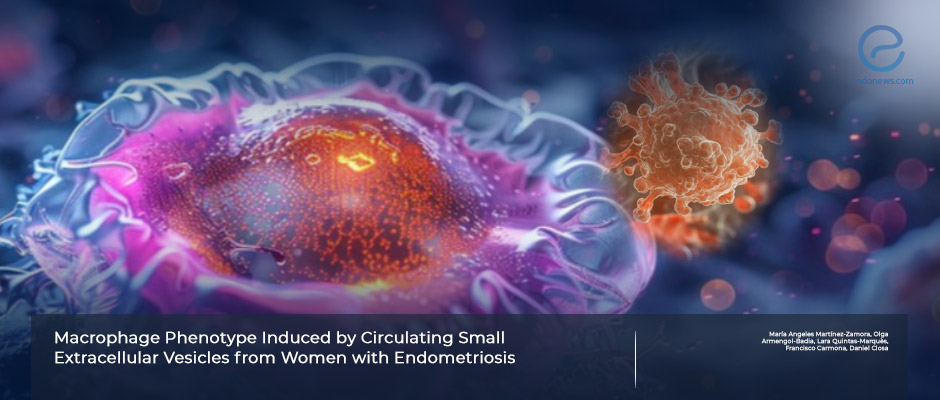
Macrophage Phenotypes Induced by Circulating Extracellular Vesicles in Endometriosis
In a study published in the Biomolecules, Martínez-Zamora et al. investigated the potential effect of circulating sEVs in the plasma of well-characterized patients with endometriosis on macrophage phenotype. This study explores how sEVs, which are tiny particles found in the blood of women…
Key Points Lay Summary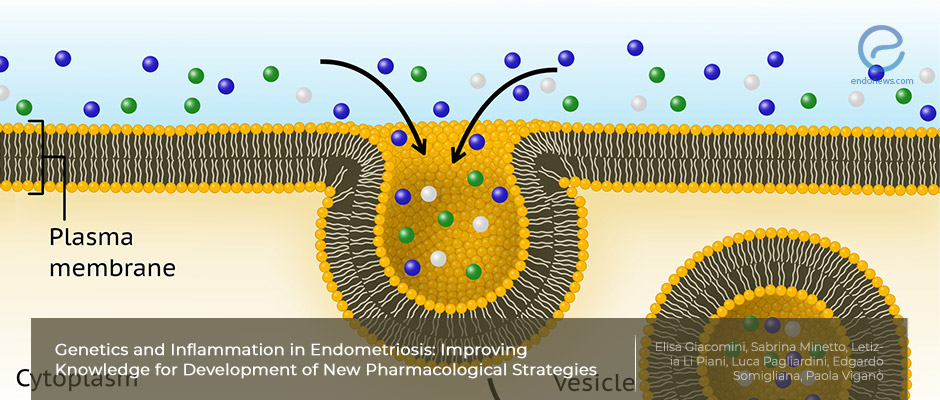
 By Nasuhi Engin Aydin
Inflammatory and genetical background of endometriosis may yield new therapeutic approaches
 By Nasuhi Engin Aydin
Elisa Giacomini and colleagues from medical centers in Milan, Italy have published their review manuscript on the inflammatory and genetical pathogenetic background of endometriosis in a recent issue of “International Journal of Molecular Sciences”, suggesting also new therapeutic approaches. The inflammatory…
Key Points Lay Summary
 By Dr. Youngran Park
Exosome: a new avenue for endometriosis research
 By Dr. Youngran Park
Endometriosis affects 10% of reproductive-aged women. The pathophysiology of this disease remains mysterious, with a lack of effective biomarkers necessitating surgical intervention for diagnosis. This creates an urgent need for accurate noninvasive diagnostic tests and the identification of effective therapeutic…
Key Points Lay Summary
 By Selma Oransay
Can we prevent the progression of endometriosis?
 By Selma Oransay
Torres-Reveron et al. from the University of Texas, USA, planned this prospective laboratory research on female rats to assay the reduce on the progression of endometriosis and recently published the results in PloS One. At first, endometriosis was induced in female rats…
Key Points Lay Summary