Stemness as the Engine of Endometriosis Progression and Therapeutic Targeting
Feb 6, 2026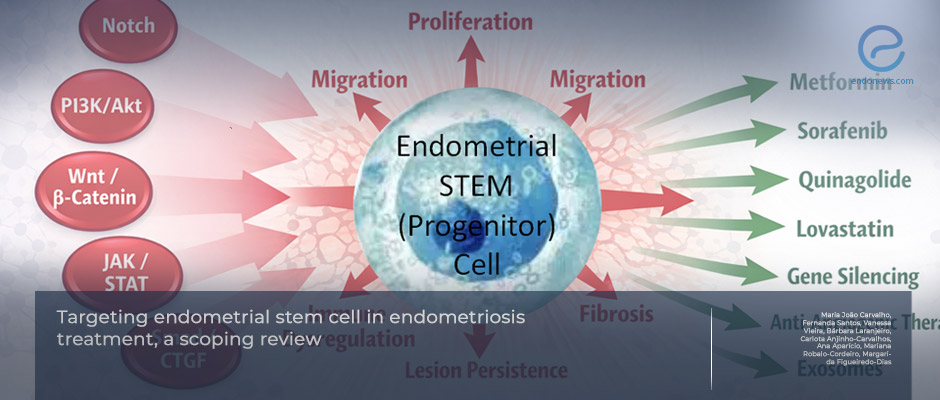
Reframing Endometriosis Treatment: Endometrial Stem Cells Move to the Therapeutic Frontline
Key Points
Highlight:
- Endometrial stem/progenitor cells (EnSCs) are increasingly recognized as key drivers of endometriosis initiation, persistence, and progression.
- Stem cell–directed therapies may offer a disease-modifying alternative to symptom-focused hormonal treatments.
Importance:
- High recurrence rates highlight the limitations of current endometriosis therapies.
- Stem cell–directed approaches may open new avenues for personalized, non-hormonal, and disease-modifying treatment strategies.
What's Done Here?
-
This scoping review systematically evaluates experimental and translational studies investigating the role of endometrial stem/progenitor cells (EnSCs) in endometriosis pathogenesis.
-
The authors synthesize current evidence on molecular signaling pathways regulating stemness and summarize emerging therapeutic strategies targeting these cellular mechanisms.
Outline:
- Overview and discussion along with translational impact forEnSC populations including mesenchymal stem cells, epithelial progenitor cells, side population cells, and very small embryonic-like stem cells.
- Analysis of EnSC involvement in lesion formation, immune dysregulation, fibrosis, angiogenesis, and cellular migration.
- Review of molecular pathways regulating stemness and lesion persistence.
- Summary of targeted therapeutic approaches including:
- Pharmacologic modulators (metformin, lovastatin, sorafenib, quinagolide)
- Gene-silencing and pathway inhibition strategies
- Anti-angiogenic therapies
- Hormonal pathway modulators
- Exosome and cell-free regenerative strategies
Strengths and Limitations:
- Strengths are: to provide a comprehensive synthesis of emerging stem cell–centered mechanisms in endometriosis; to integrate molecular features, experimental therapeutics, and translational perspectives; to highlight multiple therapeutic targets beyond conventional hormone-based management, sn to apply structured PRISMA-ScR methodology, improving transparency and reproducibility.
- Limitations are: Evidence largely derives from preclinical and experimental models, limiting immediate clinical applicability; the heterogeneity among included studies and stem cell definitions complicates direct comparisons; limited long-term clinical outcome data regarding EnSC-targeted therapies.; and the variability in experimental design and methodological approaches across studies.
From the Editor-in-Chief – EndoNews
"The growing recognition of endometrial stem/progenitor cells as key contributors to endometriosis pathophysiology reflects a broader shift in disease conceptualization—from a hormonally driven disorder to one sustained by complex cellular and microenvironmental interactions. This review consolidates emerging evidence suggesting that EnSCs participate not only in lesion initiation but also in angiogenesis, fibrosis, immune modulation, and therapeutic resistance.
Importantly, the study highlights several molecular pathways regulating stemness and identifies multiple pharmacologic and gene-targeted interventions capable of modifying these mechanisms in experimental models. While these findings reinforce the biological plausibility of stem cell–directed therapy, translation into clinical practice remains preliminary. Current evidence is largely derived from in vitro and animal studies, and heterogeneity in stem cell definitions and experimental methodologies continues to limit direct clinical extrapolation.
Nevertheless, the integration of regenerative biology into endometriosis research introduces promising opportunities for precision medicine and disease-modifying treatment strategies. Future investigations will require standardized characterization of stem cell populations, robust clinical validation, and careful evaluation of safety and long-term outcomes. As the field advances, targeting stem cell–mediated pathways may ultimately redefine therapeutic goals from symptom control toward durable disease modification."
Lay Summary
A new scoping review published in the Journal of Gynecology Obstetrics and Human Reproduction by Maria João Carvalho and colleagues from the University of Coimbra and Coimbra Academic and Clinical Centre, Portugal, explores an emerging concept in endometriosis research — the role of endometrial stem cells in disease development and treatment.
Current endometriosis treatments mainly rely on hormonal therapy or surgery, but these approaches often fail to provide long-term relief, and the disease frequently recurs.
The authors reviewed research published over the past two decades to better understand how specialized cells called endometrial stem/progenitor cells may contribute to the formation and persistence of endometriosis lesions. These cells have the ability to regenerate tissue and are believed to play an important role in helping endometriosis lesions grow, spread, and resist treatment.
The review highlights several biological pathways that control how these stem cells function and identifies experimental therapies that may block or modify these disease-driving processes. These include certain medications, gene-targeting approaches, anti-angiogenic therapies that limit blood vessel formation, and innovative cell-free treatments such as stem cell–derived exosomes.
Although most of these therapies are still in experimental or early research stages, the findings suggest that targeting stem cell activity could lead to more personalized and long-lasting treatment strategies. The authors conclude that focusing on stem cell mechanisms may represent an important step toward developing therapies that not only control symptoms but also modify the underlying disease.
Research Source: https://pubmed.ncbi.nlm.nih.gov/41570918/
Endometriosis infertility Laparoscopy Fertility outcomes ART IVF Endometrioma Minimally invasive endometriosis surgery Pelvic restoration

