Novel immune cell alterations in the endometrium of women with endometriosis
Jun 19, 2026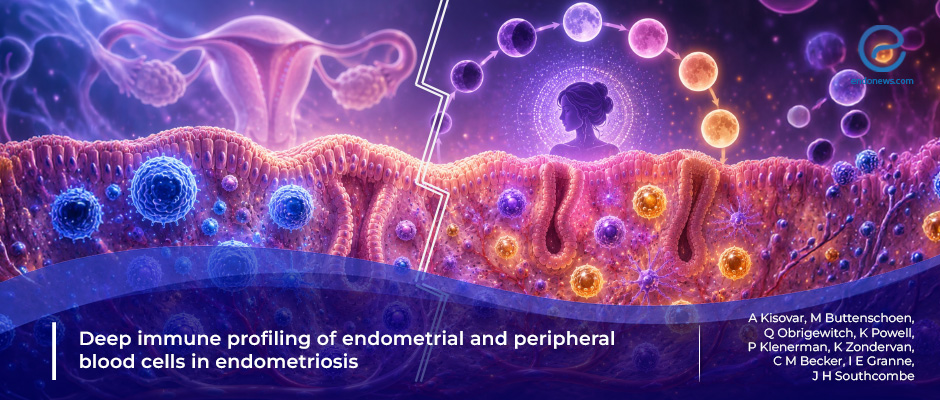
Immune mapping across the menstrual cycle uncovers previously unrecognized immune signatures in endometriosis.
Key Points
Highlights:
- Deep immune profiling identified reduced endometrial early natural killer (NK) cells and increased MAIT-like (mucosa-associated invariant) CD8+ T cells in women with endometriosis.
- Endometrial and circulating immune populations exhibited marked menstrual cycle–dependent variation.
- MAIT-cell dysregulation emerged as a previously underrecognized immune feature of endometriosis.
Importance:
- By expanding current understanding of endometriosis-associated immune dysregulation, study suggest that specific immune-cell populations may contribute to impaired endometrial function and subfertility.
- Identification of altered MAIT-cell populations provides a potential new avenue for mechanistic and therapeutic investigation.
What's Done Here?
- This is a cross-sectional immune-phenotyping study evaluating both endometrial and peripheral blood immune cells in women with and without surgically confirmed endometriosis.
- A total of 40 participants were included (28 endometriosis, 12 controls).
- More than 2.9 million immune cells were analyzed using high-dimensional spectral flow cytometry with a 36-parameter immune phenotyping panel.
- Immune-cell populations were assessed across different phases of the menstrual cycle.
- Multiplex immunohistochemical imaging was additionally used to examine the spatial distribution of immune cells within full-thickness endometrial tissue.
Key Results:
- Women with endometriosis had significantly fewer endometrial early NK cells.
- Endometrial MAIT-like CD8+ T cells were significantly increased in endometriosis.
- MAIT cells peaked around ovulation and during the window of implantation.
- Peripheral blood immune alterations were also observed, including increased early NK cells and reduced effector CD4+ and CD8+ T-cell populations.
- Endometrial and peripheral immune profiles differed substantially, suggesting that circulating immune cells do not accurately reflect local endometrial immunity.
Strengths and Limitations:
- Strengths are the comprehensive characterization of both local and systemic immune compartments using high-dimensional spectral flow cytometry and spatial tissue imaging.
- Limitations are the modest cohort size and the cross-sectional design, which limit disease subtype analyses and prevent causal inference.
From the Editor-in-Chief – EndoNews
"Endometriosis-associated immune dysfunction has long been recognized, but the specific cellular populations involved and their dynamic changes across the menstrual cycle remain incompletely understood. Using high-dimensional immune profiling, this study provides a detailed characterization of both endometrial and systemic immune compartments and identifies alterations in natural killer cells and mucosal-associated invariant T-cell populations as potential components of the disease-associated immune landscape. While the cross-sectional design precludes conclusions regarding causality, these findings contribute to the growing body of evidence suggesting that endometriosis is not merely a disorder of ectopic tissue implantation, but also a disease involving complex interactions between endocrine, immune, neural, and reproductive systems. The emergence of MAIT-cell dysregulation as a novel finding is particularly noteworthy and warrants further mechanistic investigation.
The increasing focus on immune mechanisms in endometriosis is reflected across the field. Notably, the Endometriosis Foundation of America has selected “Immuno-Endo 2027: Bridging Neuro–Immune Discovery to Multiorgan Surgery” as the theme of its 2027 medical conference, highlighting the growing recognition of neuro-immune interactions and immune dysregulation as central components of contemporary endometriosis research"
Lay Summary
Women with endometriosis have distinct alterations in specific immune-cell populations within the endometrium and peripheral blood, according to a new study that used advanced immune profiling techniques to examine immune changes across the menstrual cycle.
The findings, published in the journal Human Reproduction, suggest that immune dysregulation in endometriosis extends beyond previously recognized abnormalities and may involve mucosal-associated invariant T (MAIT) cells, a specialized immune-cell population not previously well characterized in the disease. The study was led by Dr. Holdsworth and colleagues from the University of Adelaide.
To investigate local and systemic immune alterations in endometriosis, the researchers analyzed immune-cell populations in both endometrial tissue and peripheral blood from 40 women, including 28 with surgically confirmed endometriosis and 12 controls. More than 2.9 million immune cells were examined using high-dimensional spectral flow cytometry, and immune profiles were evaluated across different phases of the menstrual cycle.
The investigators found that women with endometriosis had significantly reduced populations of early natural killer (NK) cells within the endometrium, together with increased populations of MAIT-like CD8+ T cells. Additional analyses confirmed the presence of MAIT cells in the endometrium and demonstrated cyclical fluctuations, with the highest levels observed around ovulation and during the window of implantation.
The study also identified differences in circulating immune-cell populations, including increased early NK cells and reductions in certain effector T-cell populations. Importantly, immune profiles in peripheral blood did not mirror those observed within the endometrium, suggesting that blood-based measurements may not adequately reflect local immune events occurring at the tissue level.
According to the authors, these findings support the concept that endometriosis is associated with complex alterations in both innate and adaptive immunity and identify MAIT cells as a potentially important component of the endometrial immune environment. They note that further studies will be required to determine whether these immune changes contribute directly to disease development, infertility, or impaired endometrial function.
Research Source: https://pubmed.ncbi.nlm.nih.gov/42243626/
immunity menstrual cycle endometrium T cells NK cells neuroimmune
DISCLAIMER
EndoNews highlights the latest peer-reviewed scientific research and medical literature that focuses on endometriosis. We are unbiased in our summaries of recently-published endometriosis research. EndoNews does not provide medical advice or opinions on the best form of treatment. We highly stress the importance of not using EndoNews as a substitute for seeking an experienced physician.<< Previous Article
