Endometriosis and Eating Disorder Vulnerability
Feb 26, 2026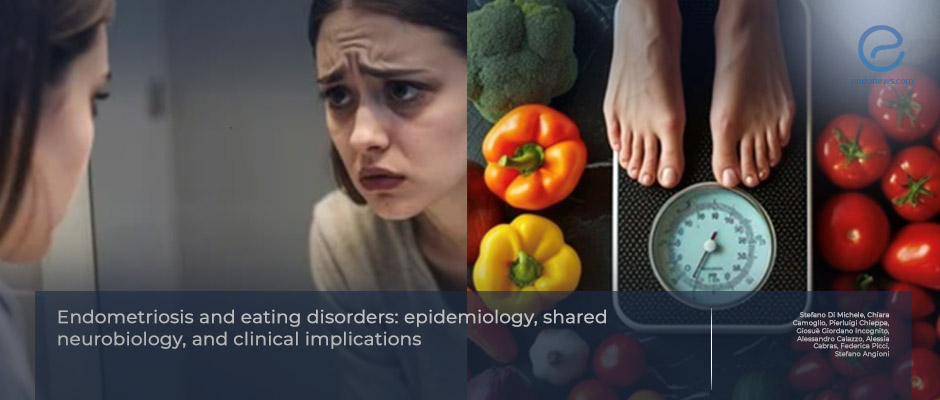
Endometriosis and Eating Disorders: Emerging Links Beyond Comorbidity
Key Points
Highlights:
- Evidence suggests that women with endometriosis have higher prevalence of disordered eating behaviors, with epidemiologic studies indicating a possible association between the two conditions.
- Genetic and psychosocial findings point toward shared vulnerability pathways involving neuroimmune and behavioral mechanisms.
Importance:
- Recognizing the potential intersection between endometriosis and eating disorders may support more comprehensive clinical assessment that integrates reproductive, metabolic, and mental health dimensions.
What’s done here?rs.
- This narrative review synthesizes current epidemiologic, clinical, and mechanistic evidence examining the coexistence of endometriosis and eating disorders
- The authors discuss shared psychosocial factors and biological pathways, including interactions within the brain–gut–pelvis axis.
Key results:
- Disordered eating patterns, including emotional eating and binge tendencies, appear more frequently in women with endometriosis and are associated with chronic pain burden.
- Psychological factors such as body image concerns, heightened self-criticism, and coping responses to chronic symptoms may contribute to vulnerability.
- Emerging evidence suggests overlapping molecular signals involving appetite regulation, neuroendocrine pathways, and inflammatory mediators.
Strengths and Limitations:
- Integrating epidemiologic, psychosocial, and biological perspectives into a multidimensional framework; highlighting emerging mechanistic hypotheses linking chronic pain and behavioral outcomes are the strengths.
- However, limitations are: much of the available literature is based on small, heterogeneous, and cross-sectional studies; and rhe reliance on self-report screening tools limits diagnostic certainty and comparability across studies.
From the Editor-in-Chief – EndoNews
"The recognition of endometriosis as a condition with multidimensional health implications has expanded the scope of inquiry beyond pelvic pathology to encompass psychological and behavioral comorbidities. This review synthesizes emerging evidence suggesting that eating disorders and disordered eating behaviors may occur more frequently among individuals with endometriosis, highlighting a potential intersection between chronic pain, psychosocial stressors, and neurobiological regulation of appetite and mood.
Importantly, the literature summarized in this review reflects a field that remains in an exploratory phase. While epidemiologic studies and genetic analyses indicate possible associations and shared vulnerability pathways, most available data derive from small or cross-sectional cohorts, limiting the ability to define directionality or causality. The coexistence of chronic pain, body image concerns, and coping responses may contribute to behavioral outcomes, but these relationships are likely multifactorial and context dependent.
The review’s value lies in framing the relationship between endometriosis and eating disorders within a biopsychosocial model that integrates neuroimmune signaling, behavioral adaptation, and lived disease experience. Such an approach aligns with the broader movement toward holistic understanding of chronic gynecologic conditions, emphasizing that symptom burden extends beyond anatomical findings alone. At the same time, the heterogeneity of diagnostic criteria, study populations, and outcome measures underscores the need for standardized methodologies and longitudinal research designs.
From a clinical standpoint, the findings support heightened awareness of potential behavioral and psychological comorbidities in endometriosis care, while stopping short of recommending specific screening strategies in the absence of stronger evidence. Future research integrating prospective cohort designs, validated psychiatric assessments, and mechanistic biomarkers will be essential to clarify whether shared biological pathways contribute to disease vulnerability or whether observed associations primarily reflect the cumulative impact of chronic illness.
In summary, this review advances the conversation by situating eating disorders within the broader clinical landscape of endometriosis, encouraging a more integrated research agenda that bridges gynecology, psychiatry, and behavioral science. Its principal contribution is not to establish causation, but to highlight an underexplored dimension of patient experience that warrants careful, methodologically rigorous investigation."
Lay Summary
Growing recognition of endometriosis as a condition with systemic implications has prompted increasing attention to its psychological and behavioral dimensions.
Emerging evidence suggests that women with endometriosis may experience higher rates of disordered eating patterns and eating disorders compared with the general population, with epidemiologic studies reporting a markedly increased likelihood of these comorbidities.
In a review published in the Archives of Gynecology and Obstetrics, Di Michele and colleagues synthesized current evidence on the epidemiologic overlap, shared biological pathways, and clinical implications linking endometriosis and eating disorders.
The authors highlight that disordered eating behaviors—including emotional eating and binge tendencies—appear more frequently among women with chronic pelvic pain and may reflect complex interactions between symptom burden, coping responses, and psychosocial stressors.
The review also discusses contributing factors such as body image concerns, heightened self-criticism, and behavioral responses to chronic symptoms, as well as emerging data suggesting overlapping neuroendocrine and inflammatory pathways involved in appetite regulation and pain processing.
Genetic findings further support the possibility of shared susceptibility between the two conditions.
Together, these observations underscore the importance of considering eating behaviors within the broader clinical context of endometriosis.
While evidence remains largely observational, the authors propose that awareness of this potential intersection may support more holistic care approaches that integrate physical, nutritional, and psychological aspects of patient management.
Research Source: https://pubmed.ncbi.nlm.nih.gov/41563503/
endometriosis eating disorders emotional eating binge eating disorder diet neurobiology

