Could Ferroptosis Help Explain Endometriosis Development?
Jun 12, 2026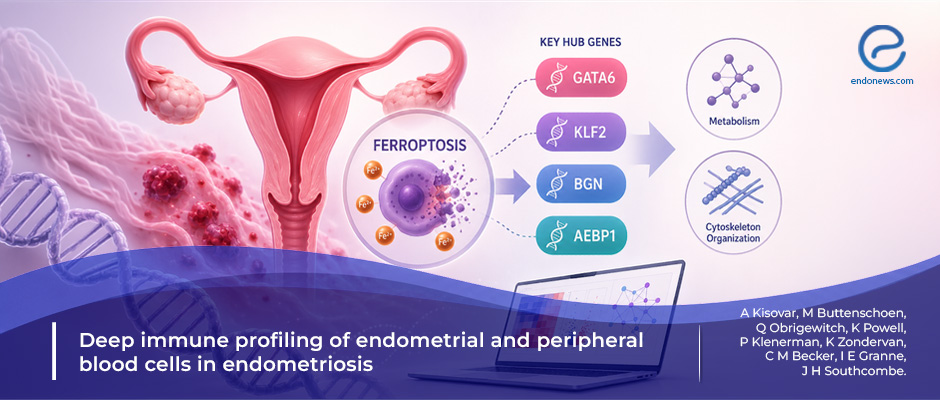
Four ferroptosis-associated hub genes may contribute to endometriosis pathogenesis and represent potential targets for future research.
Key Points
Highlights:
- Ferroptosis-related molecular pathways may contribute to the development and persistence of endometriosis.
- Four hub genes (GATA6, KLF2, BGN, and AEBP1) emerged as potential regulators linking ferroptosis to endometriosis pathogenesis.
Importance:
- The findings provide additional evidence that dysregulated ferroptosis may be involved in endometriosis and identify candidate molecular targets for future mechanistic and therapeutic research.
What's Done Here?
- This is an integrative bioinformatics study using publicly available gene-expression datasets from endometriosis and control endometrial tissues.
- The investigators analyzed two GEO datasets (GSE7305 and GSE25628) and intersected differentially expressed genes with a curated ferroptosis gene database.
- Protein-protein interaction network analysis was performed to identify central ferroptosis-related genes associated with endometriosis.
- Pathway enrichment analyses were then used to explore biological processes potentially linking ferroptosis and endometriosis.
Key Results:
- Eleven ferroptosis-related genes were consistently upregulated in endometriosis tissues across both datasets.
- Four hub genes—GATA6, KLF2, BGN, and AEBP1—were identified as central components of the ferroptosis-related network.
- Enrichment analyses linked these genes to taurine/hypotaurine metabolism and cytoskeletal pathways.
- The results suggest that altered ferroptosis-related mechanisms may participate in endometriosis pathogenesis.
Strengths and Limitations:
- Strengths are the integration of multiple public datasets and the use of complementary bioinformatics approaches to identify ferroptosis-associated candidate genes and pathways in endometriosis.
- Limitations are the small sample sizes of the source datasets, reliance on transcriptomic data alone, and the absence of protein-level, functional, or clinical validation.
From the Editor-in-Chief – EndoNews
"This study explores the potential involvement of ferroptosis-related molecular pathways in endometriosis through an integrative bioinformatics analysis of publicly available transcriptomic datasets. The identification of GATA6, KLF2, BGN, and AEBP1 as candidate hub genes provides a hypothesis-generating framework linking ferroptosis, cellular metabolism, and cytoskeletal regulation to endometriosis pathogenesis.
However, the findings should be interpreted with considerable caution. The study is based exclusively on in silico analyses derived from relatively small public datasets and lacks independent cohort validation, protein-level confirmation, or functional experimentation. Consequently, the biological relevance of the identified genes and pathways remains uncertain. While ferroptosis represents an intriguing area of investigation in endometriosis research, the current work primarily identifies associations rather than mechanistic evidence.
Nevertheless, the study contributes to the growing literature examining iron metabolism and ferroptosis in endometriosis and may help prioritize candidate genes for future experimental investigation. Validation in patient-derived tissues and mechanistic studies will be essential before any conclusions regarding disease pathogenesis, biomarker development, or therapeutic targeting can be drawn."
Lay Summary
Ferroptosis is a recently recognized form of programmed cell death that depends on iron and oxidative stress. Because endometriotic lesions are known to contain excess iron and exhibit increased oxidative stress, researchers have proposed that abnormalities in ferroptosis may contribute to the development and persistence of endometriosis. However, the molecular mechanisms underlying this relationship remain poorly understood.
To explore this possibility, researchers analyzed publicly available gene-expression datasets containing samples from endometriosis lesions and normal endometrial tissues. They combined these data with a comprehensive database of ferroptosis-related genes and identified a group of genes that were consistently overexpressed in endometriosis. Using network and pathway analyses, they further investigated how these genes may interact and which biological processes they may influence.
The analysis identified four genes—GATA6, KLF2, BGN, and AEBP1—as potential hub genes that may play central roles in ferroptosis-related pathways in endometriosis. The study also highlighted possible associations with pathways involved in taurine metabolism and cytoskeletal organization, suggesting that ferroptosis may interact with broader cellular processes involved in lesion survival, adaptation, and tissue remodeling.
Although these findings provide additional support for investigating ferroptosis in endometriosis, they should be interpreted cautiously. The study was based entirely on computational analyses of existing datasets and did not include laboratory experiments or clinical validation. As a result, the identified genes cannot yet be considered disease drivers, biomarkers, or therapeutic targets. Further experimental studies will be necessary to determine whether these molecular pathways have a direct biological role in endometriosis and whether they could eventually be exploited for diagnosis or treatment.
